

Furnace Sizing Guide: How Many BTUs Does Your House Need?
 At Dean’s Home Services, we know what it takes to keep your home warm and cozy, even as the snow falls and temperatures plummet. One of the most common questions homeowners ask our team is, “What size furnace do I need for my house?” The answer depends on your home’s square footage, insulation, climate, and personal heating needs. This guide from our HVAC professionals explains furnace sizing and helps you make a better-informed decision.
What Does Furnace Size Mean?
When we talk about furnace size, we usually mean the unit’s heating capacity, not its physical size. When your home furnace runs efficiently, it produces a certain level of heat output, measured in a unit called a BTU, or British Thermal Unit.
Choosing a furnace for a home means doing heating BTU calculations and determining the best furnace size by square footage, along with other factors, which we will explore further below.
What Is a BTU, and Why Does It Matter?
A British Thermal Unit, or BTU, represents the amount of heat the furnace can produce in an hour. The furnace’s primary BTU rating, or “input BTU,” found on the rating plate sticker inside the front panel, is based on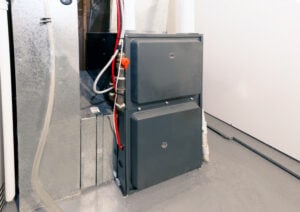 the amount of fuel energy the furnace burns per hour.
How Many BTUs Does Your Furnace Need?
Proper furnace sizing is a complex calculation that you can’t do with a simple online furnace BTU calculator or furnace sizing calculator, because each home is unique. A furnace calculator that estimates BTUs per square foot may provide a good estimate, but it shouldn’t be your only resource.
At Dean’s Home Services, before furnace installation, our qualified technicians will help homeowners in our service area answer the question, “How many BTUs do I need?” by taking precise measurements and performing a thorough energy-efficiency evaluation.
Furnace Size by Home Square Footage
What size furnace works for a 1,500-square-foot house in Minnesota? To get a rough estimate of your home’s BTU requirements, use the chart below:
- 1,200-square-foot home: 35,000–75,000 BTUs
- 1,500-square-foot home: 45,000–90,000 BTUs
- 1,800-square-foot home: 55,000–110,000 BTUs
- 2,000-square-foot home: 60,000–125,000 BTUs
- 2,400-square-foot home: 75,000-145,000 BTUs
These calculations are incomplete, as many factors affect furnace sizing. Minnesota homeowners needing to know what size furnace works for 2000 sq. ft., for example, should consider whether they have an open or closed floor plan or an attached garage, how many stories their home has, ceiling height, and more, as these factors can affect airflow and heat loss, which alters furnace size requirements.
How Minnesota’s Climate Affects Furnace Sizing
Living in the Twin Cities means harsh winters, so higher BTU requirements are more common than in milder climates. When our HVAC technicians perform furnace size calculations in Minnesota, we account for below-freezing temperatures and potential heat loss from your home to ensure your new furnace can meet high demands all winter long.
How Insulation Changes Your Heating Requirements
Did you know how many BTUs it takes to heat a house in Minnesota depends on attic and wall insulation? Well-insulated homes require less heating power, while older or poorly insulated homes, or homes with more exterior walls, may need a larger furnace. By improving home and attic insulation, you stop heat from escaping through walls and ceilings, reducing the amount of heat your furnace needs to produce.
How Windows and Doors Affect Your Home’s Heating Load
When determining what size furnace is required for a 2000-square-foot house, Minnesota technicians may need to increase the size if windows and doors are drafty. Warm air can leak out, forcing your furnace to work harder to meet your heating needs. Large windows can also increase the required BTU load, since glass can’t hold heat as well as an insulated wall.
Replacing single-pane windows and drafty doors can change the size of furnace your home needs, as can replacing worn weatherstripping and sealing framing joints.
Why Ceiling Height Matters When Sizing a Furnace
Your average square-footage-based furnace BTU calculator in Minnesota will not be accurate without calculating ceiling height. Homes with high ceilings require more BTUs to heat the extra air volume, and warm air rises, making lower spaces feel cooler longer and forcing your furnace to run more often to keep you comfortable.
How Furnace Efficiency and AFUE Affect BTU Output
Efficiency is another reason you cannot decide which furnace to buy based solely on BTU per square foot for your Minnesota home. A high-efficiency furnace with a lower BTU input rating may achieve the same heat production as a less-efficient or older model with a higher BTU rating.
Your furnace’s AFUE rating reflects how efficiently your gas furnace converts fuel into heat energy. This means you can replace your old furnace with one that has the same or a lower BTU rating.
Our technicians can help you decide which furnace is right for you. We can also recommend efficiency boosters to Minnesotans to minimize energy loss and lower heating costs, such as smart thermostat installation and annual fall furnace maintenance. Become a Dean’s Club Member to save on annual furnace inspections and tune-ups.
What Is a Manual J® Load Calculation?
A Manual J® load calculation is an industry-standard air conditioner and furnace size calculator method created by the Air Conditioning Contractors of America (ACCA). This method includes all important factors, such as:
- Square footage of the home
- Ceiling heights
- Insulation levels
- Windows and doors (including orientation, materials, and type)
- Local climate
- Number of occupants
- Number of appliances and other heat sources
A Manual J® load calculation ensures code compliance, prevents oversized equipment, and saves you money on utility bills and premature repairs.
What Happens When a Furnace Is Too Large?
Selecting the right furnace size isn’t just about comfort. It’s also about efficiency. An oversized furnace can cycle on and off too frequently, wasting energy and wearing out faster. Along with asking, “What size furnace do I need in Minnesota?” You also need a correctly sized duct system to prevent energy waste, uneven heating, and system strain.
What Happens When a Furnace Is Too Small?
An undersized furnace will struggle to heat your home adequately, leaving you chilly on those subzero nights. Improper furnace sizing in your Twin Cities, MN, home also strains the furnace, reducing its life expectancy as it struggles to provide consistent heat and good indoor air quality. That is why your furnace may not perform adequately after a home addition because of the added square footage.
Why Square Footage Alone Cannot Determine Furnace Size
By now, you know you can’t determine the right furnace size by square footage alone. Minnesota homeowners often wonder how many BTUs they need in Minnesota to enjoy whole-home comfort, but it’s also important to consider factors like:
- Whether the basement is finished.
- Air-tightness and insulation quality.
- The layout of the rooms in the house.
- The local Minnesota climate.
- What building materials your house is made from.
Choosing the Right Furnace for Your Twin Cities Home
For precise furnace sizing, it’s best to work with a professional HVAC technician. At Dean’s Home Services, we perform heat load calculations as part of our furnace installation services, considering all the variables that affect the optimal furnace size for your Minneapolis, MN home.
Our customer reviews speak for themselves. If you need help deciding whether to repair or replace your furnace or selecting the right furnace size in St. Paul, MN, our team is ready to assist.
Find the Right Furnace Size With Dean’s Home Services
Don’t rely on a BTU calculator to answer what size furnace you need for a 250-square-foot house in Minnesota. Call Dean’s Home Services today to schedule furnace services in Minneapolis, St. Paul, or the surrounding areas. From emergency furnace services to complex load calculations, we will guide you through the selection process and help you choose the perfect furnace for your home.
Meet the author





- Free annual evaluations
- 10% discount on repairs and equipment
- Priority scheduling
- No regular travel charges
- Discounted after-hours travel charges