

Are Ductless Mini Splits Worth It for Older Brooklyn Center Homes?
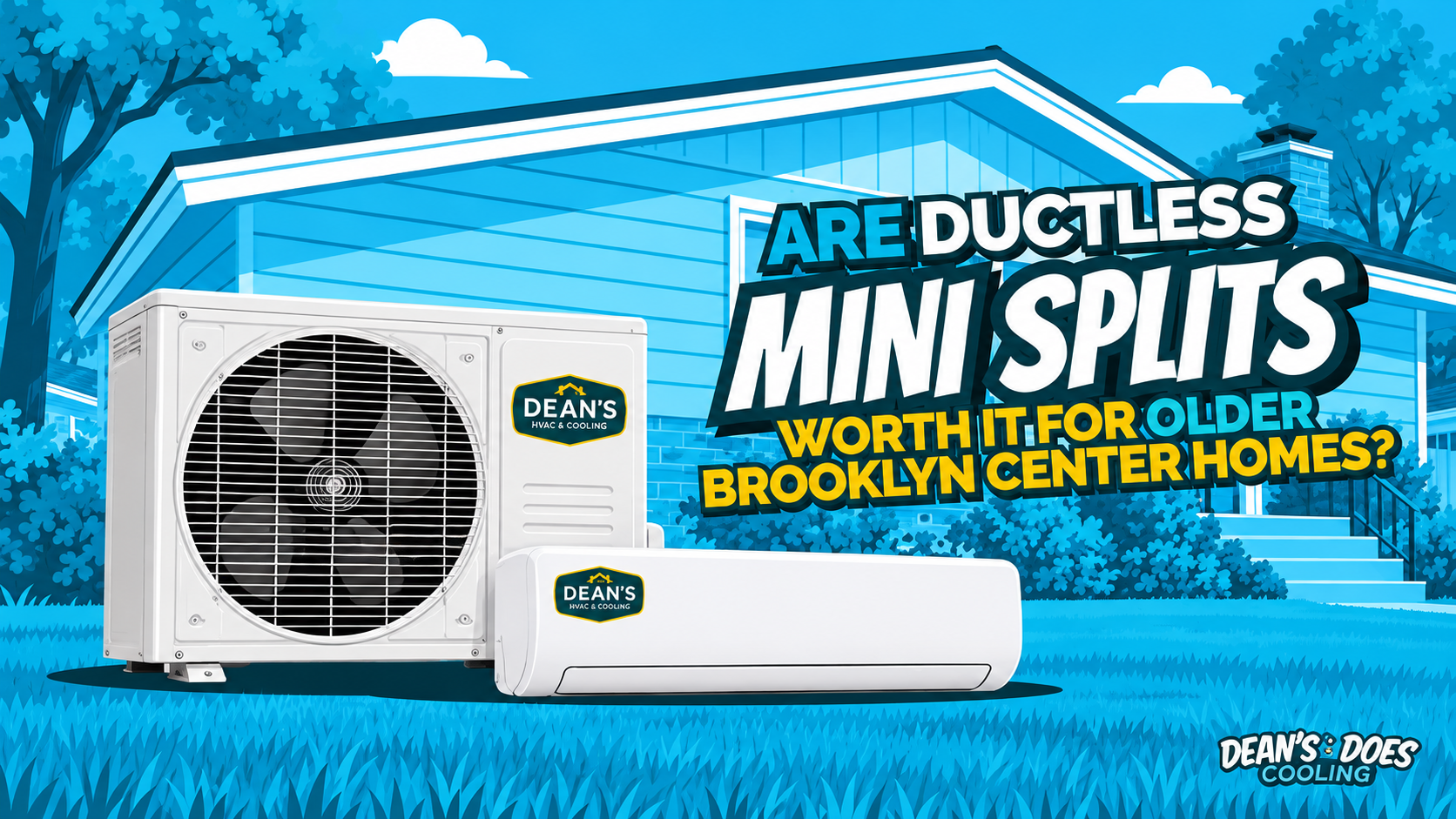
Climate control can be challenging in older Brooklyn Center homes, whether sprawling ranchers or pre-war styles. Ductless mini-splits in Brooklyn Center, MN, can provide even heating and cooling without altering the unique features of historic, character homes. Learn how mini-splits work, whether they’re a good fit for your older home, and how to choose between ducted and ductless.
Why Mini-Splits Can Be a Good Fit for Older Homes
Many midcentury and pre-war homes in the Twin Cities are challenging to heat and cool. Mini-splits for older homes can be a good fit because they don’t require extensive renovations to install or modify ductwork, which preserves the character and architecture of historic properties.
How Ductless Mini-Splits Work
Ductless mini-split systems consist of an outdoor compressor unit connected to one or more indoor air handlers. Each indoor unit delivers conditioned air directly into the room or zone rather than pushing it through ducts and vents.
Can a Mini-Split Provide Both Heating and Cooling?
Mini-splits use heat pump technology, so they can provide both ductless heating and cooling for year-round comfort. A reversing valve lets the mini-split heat pump system switch between modes. In summer, the indoor heads extract heat from your home and release it outside. In winter, the reversing valve reverses refrigerant flow to draw heat from outside and transfer it to the indoor air handler units of the ductless heat pump system.
Single-Zone vs. Multi-Zone Mini-Split Systems
Mini-split systems come in single-zone or multi-zone configurations.
Single-zone systems have one outdoor unit connected to one indoor head. They’re best suited for supplementing your HVAC system and controlling the temperature in a single room, converted garage, remodeled basement, or other areas with uneven temperatures.
Multi-zone mini-split systems consist of a more powerful compressor and multiple indoor heads, usually up to five per outdoor unit. These configurations let you manage temperatures individually in multiple areas throughout your home, such as different levels.
Why Older Brooklyn Center Homes Can Be Difficult to Heat and Cool
Older homes in Brooklyn Center neighborhoods can be difficult to heat and cool due to these common characteristics:
- Lack of modern insulation: Many older homes have minimal wall and attic insulation, and these drafty buildings tend to let furnace heat escape in the winter and pull in warm air during the summer.
- Historical building features: Single-pane windows, drafty door and window frames, unsealed roof and wall penetrations, and other elements common in midcentury Brooklyn homes reduce building envelope efficiency.
- Additions and remodels: Original HVAC was sized for the home’s initial size and layout and may be stretched beyond capacity when you add rooms, build new floors, or divide or combine areas.
- Deteriorating or incompatible ductwork: Older homes used ductwork primarily for heating, and these narrow ducts can’t accommodate the output of modern HVAC equipment. These ducts are also likely beyond their functional lifespan due to corrosion, collapsed sections, and debris buildup.
- Single-zone systems: A single thermostat can’t properly account for temperature variations throughout sprawling rambler-style homes or multi-level buildings.
- No existing ductwork at all: Brooklyn Center homes built before the 1960s are less likely to have ductwork, since many relied on boiler systems with radiators or baseboards instead.
Installing Air Conditioning in a Home Without Existing Ductwork
If your home doesn’t have existing ductwork, you can still install air conditioning. Instead of building a ducted HVAC system or relying on window air conditioners, mini-splits for a house without ductwork are often an easier, more efficient solution. Ductless ACs only require a three-inch hole in the wall to run conduit between the indoor and outdoor units, so you don’t need to demolish walls or ceilings to install ducts.
Mini-Splits vs. Adding Ductwork to an Older Home
There are several factors to consider between mini-splits and adding ductwork to an older home:
- Installation: Mini-split installations need only a small hole and mounting for the indoor and outdoor units, while adding ductwork requires cutting into plaster walls and lowering high ceilings to make room for ducts.
- Appearance: Indoor ductless air conditioning units are visible, but they are compact and available in discreet cassette styles. Ducts are hidden behind walls, but structural modifications can affect the original character of homes.
- Energy efficiency: Mini-splits are highly efficient, while ducted systems are more prone to leaks and may lose efficiency.
- Upfront cost: Ductless mini-splits cost more upfront than a ducted central AC unit, but adding or modifying ductwork can add significant labor costs for demolition, installation, and reconstruction.
Using Mini-Splits to Solve Hot and Cold Spots
Throughout Brooklyn Center, ramblers and pre-war homes without modern HVAC upgrades frequently struggle with hot and cold spots. Mini-splits for home additions and remodeled spaces can balance these temperature imbalances thanks to built-in zoning and flexible mounting options. You can install air handlers in hot upstairs bedrooms, chilly ground levels, or drafty additions, and each unit will manage output based on its zone’s needs.
How Mini-Splits Affect the Character of an Older Home
Mini-splits affect an older home’s character in several ways. Choosing a mini-split preserves a historic home’s character and architecture by replacing window AC units that block natural light and hurt curb appeal. It also avoids demolishing original construction and features in older homes, preserving plaster walls, high ceilings, wood paneling, and built-ins.
Even so, mini-splits require careful installation to prevent modern units from interrupting historic home aesthetics. Professionals can install indoor mini-splits to help them blend into their surroundings while still allowing proper airflow, and thoughtful outdoor-unit mounting protects curb appeal.
Where Indoor Mini-Split Units Can Be Installed
Indoor mini-split units come in various styles and can be installed in different locations:
- Wall-mounted: Mount high on walls and out of your immediate line of sight.
- Floor console: Sits against the wall on or near the floor, similar to a radiator, and is a good alternative for rooms with sloped ceilings or limited wall space.
- Ceiling cassette: Recessed flush into a ceiling with only a flat grille visible.
- Under-ceiling: Mount against the ceiling surface to save space and optimize airflow.
Can Mini-Splits Handle Minnesota Winters?
Mini-splits can handle Minnesota winters if they’re rated properly for severe sub-zero conditions. Modern cold-climate mini-splits operate efficiently down to about 5°F to 15°F, which is typical for Minnesota winters.
Technicians must mount outdoor units to prevent heavy snow accumulation from damaging the mini-split. Proper mini-split maintenance also optimizes performance and efficiency during sub-zero temperatures.
Using a Mini-Split With an Existing Furnace or Boiler
Many homeowners choose a hybrid system that pairs a mini-split with an existing furnace or boiler to optimize efficiency and performance. These hybrid, or dual-fuel, systems let you use the mini-split in summer, on milder winter days, and in the shoulder seasons, then switch to the boiler or radiator once temperatures drop and gas heating becomes more efficient.
When a Ductless Mini-Split May Not Be the Right Solution
Mini-splits are versatile and efficient, but they aren’t the right solution for every home. Ductless HVAC may not be the ideal choice for you if:
- Your home has existing ductwork that’s in good condition and compatible with modern HVAC.
- Your home has an open-concept floor plan — mini-splits may be underpowered and unable to properly regulate temperature and summer humidity.
- You prefer the look of vents over indoor air handlers and are willing to demo structures to install ducts.
How to Determine if a Mini-Split Is Right for Your Brooklyn Center Home
Determining if a mini-split is right for your Brooklyn Center home involves considering these factors:
- Current HVAC equipment: If you have existing ductwork in good condition, installing a high-efficiency central AC and furnace or boiler is cost-effective, but a mini-split system is usually less costly if your home doesn’t have ducts.
- Home layout: Mini-split systems can even out temperatures in challenging home layouts, such as multiple levels, additions, converted garages, or basements.
- Energy efficiency: Beyond avoiding leaks, mini-splits and built-in zoning let you adjust or turn off units in unoccupied areas to conserve energy, so long-term utility savings can help offset the upfront cost.
- Lifespan: With accurate sizing and proper maintenance, ductless HVAC systems last 10 to 15 years or longer.
- Maintenance needs: Mini-splits require filter cleaning every two to eight weeks, more often during heavy use.
Explore Ductless Mini-Split Solutions With Dean’s Home Services
Learn whether ductless mini-splits are right for your home with expert guidance from our customer-focused team at Dean’s Home Services. Contact us today to schedule service or get an estimate for mini-split installation.






- Free annual evaluations
- 10% discount on repairs and equipment
- Priority scheduling
- No regular travel charges
- Discounted after-hours travel charges