
















Indoor Air Quality Testing in Minneapolis
Indoor air quality testing assesses the air inside your home and identifies pollutants that affect comfort, health, and HVAC performance. Many airborne issues develop covertly, especially in tightly sealed homes during long Minnesota winters. At Dean’s Home Services, we provide professional indoor air quality testing in Minneapolis, backed by decades of local experience and quality workmanship.
Why Indoor Air Quality is Important for Homeowners
Indoor air quality refers to the characteristics of the air inside your home, such as the concentration or type of airborne particles. Indoor air testing or assessment evaluates these factors using specialized equipment.
Pollutants enter your home through everyday activities, such as cooking, cleaning, bathing, and normal system operation, then continually circulate through your home. Dust, pet dander, mold spores, volatile organic compounds (VOCs), and combustion gases can accumulate over time, especially in poorly ventilated spaces. In the Twin Cities area, long, harsh winters lead homeowners to seal windows and doors tightly, which reduces fresh-air circulation and allows pollutants to concentrate more rapidly.
These contaminants can have significant health impacts, with short-term exposure causing symptoms such as:
- Allergic reactions
- Headaches
- Exacerbated asthma
- Sinus congestion and pressure
- Fatigue
- Poor sleep
Signs You Need Air Quality Testing
Although poor indoor air quality may develop gradually and subtly, certain signs may warrant further investigation with an indoor air quality assessment in Minneapolis. Schedule indoor air quality testing if you notice these signs consistently throughout your home:
- Musty odors or lingering smells that return after cleaning
- Excess dust buildup on surfaces shortly after wiping
- Family members coughing, sneezing, or experiencing increased respiratory irritation primarily indoors
- Imbalanced humidity, such as dry air or persistent dampness
- Visible mold growth
- Recent plumbing leaks or water damage
- A stuffy indoor feeling, even with clean HVAC filters
What’s Included in Our Air Quality Testing
At Dean’s Home Services, our indoor air quality testing process provides homeowners with insights into their home’s air quality conditions and practical next steps.
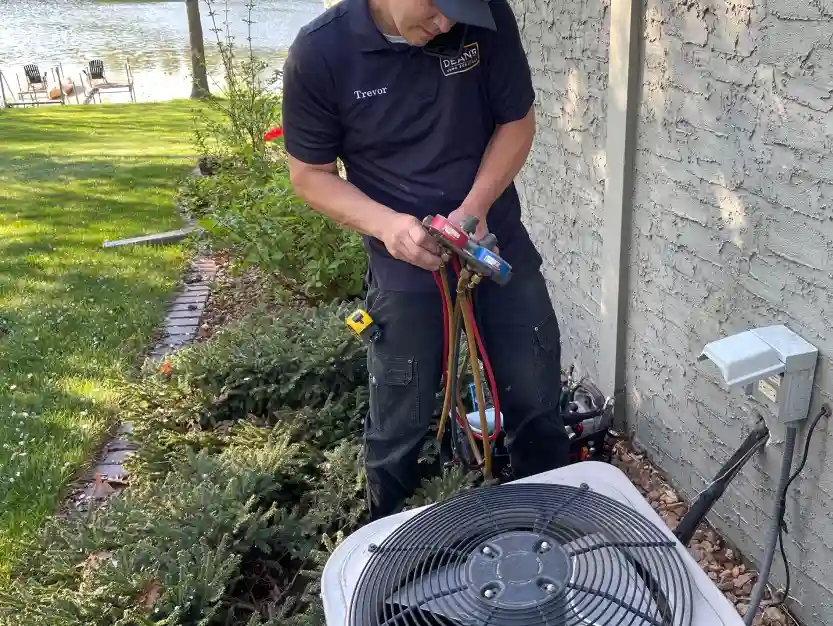
We begin with an inspection of your HVAC system and ductwork to understand how air circulates throughout your home and how components may contribute to contaminant accumulation. We follow up with humidity and ventilation assessments to assess risk factors for poor air quality. Then, we collect air samples and sensor readings to measure particulate matter, allergens, and VOCs, while evaluating humidity and ventilation performance to identify imbalances.
After testing, we provide a detailed report explaining our findings in plain, jargon-free language along with recommendations tailored to your home’s air quality characteristics, size, layout, HVAC equipment, and other factors. This approach helps you make informed decisions about your IAQ solutions.
Common Indoor Air Contaminants We Identify
IAQ testing targets specific pollutants that affect comfort and health. These pollutants originate from various sources and have distinct effects, and each requires a specialized IAQ strategy.
Dust & dander
Dust and pet dander originate from skin cells, fabrics, flooring, and furnishings, then circulate through air ducts. These particles aggravate allergies and reduce airflow efficiency when they build up within HVAC components.
Mold & mildew spores
Damp areas provide ideal conditions for mold spores to grow, including basements, bathrooms, and other humid areas in your home. These spores travel through the air, even without visible signs.
Volatile organic compounds
VOCs are gases released from building materials, paints, furnishings, cleaning products, and stored household items. These compounds can cause headaches and irritation at elevated levels, particularly in sealed homes.
Carbon monoxide & other gases
Gas furnaces, kitchen appliances, fireplaces, and other fuel-burning sources emit carbon monoxide and combustion byproducts. Even brief exposure affects comfort and safety, causing headaches and nausea, and high concentrations or prolonged exposure can be fatal. Testing identifies red flags in combustion gases and confirms that ventilation and exhaust systems are safe.
Bacteria and viruses
Airborne bacteria and viruses circulate through shared indoor air, especially in high-traffic or high-touch living areas. These contaminants can accumulate quickly when windows are closed during the winter months, when people are more likely to stay indoors.
High or low humidity levels
Humidity affects perceived air temperature. High humidity often makes temperatures feel even colder or hotter. Excess moisture also promotes mold growth, while dry air irritates skin and respiratory passages.
Our Indoor Air Quality Solutions
Once our team completes indoor air quality testing and confirms the source of air quality concerns, we recommend targeted improvements that work with your existing HVAC system. These may include:
- Whole-home air purifiers: A whole-home air purifier captures fine particles and allergens as air circulates throughout the home.
- Humidifiers & dehumidifiers: Whole-home humidifiers and dehumidifiers regulate moisture levels to balance indoor conditions.
- Duct cleaning: Professional cleaning removes accumulated debris and restores proper airflow.
- HVAC filter upgrades: Upgrading to high-efficiency filters increases particle capture without reducing system efficiency.
- UV germicidal lights: Installed within HVAC equipment, UV germicidal lights eliminate microbial growth at the source.
Why Choose Dean’s Home Services
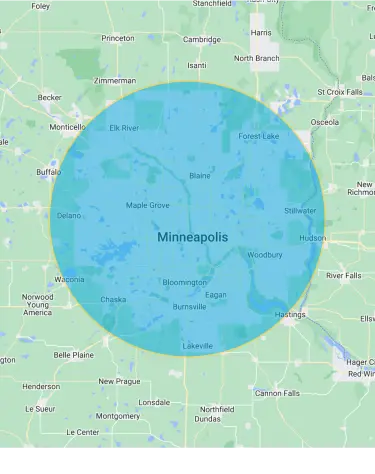
Serving Minneapolis and the Twin Cities areas for more than 25 years, our team at Dean’s Home Services has firsthand understanding of local indoor air quality challenges, such as different housing construction styles and climate factors.
Our licensed HVAC professionals assess indoor air quality with precision and transparency, explaining findings clearly and outlining practical options. As a locally owned company with consistently high customer ratings, we combine fair pricing with a commitment to customer satisfaction.
Get Indoor Air Quality Solutions in Minneapolis With Dean’s Home Services
If you’re ready to understand what’s floating throughout your home, indoor air quality testing from Dean’s Home Services provides expert assessment and long-term solutions. Contact us to schedule your indoor air quality testing in Minneapolis.
IAQ Testing FAQ:
How long does an indoor air quality test take?
Most indoor air quality tests take one to two hours, depending on home size and system complexity. This includes equipment setup, sample collection, HVAC inspection, and reviewing conditions throughout occupied living areas.
How often should indoor air quality testing be done?
Many homeowners schedule testing every few years or after major changes, such as renovations, water damage, or new HVAC installation. Retesting is also a reliable option if you begin experiencing new or persistent symptoms.
How can I improve indoor air quality myself?
To manage day-to-day indoor air quality, use kitchen and bathroom exhaust fans to prevent particles from spreading and to regulate humidity. Replace HVAC filters regularly, store chemicals properly, and open doors and windows when weather permits.
Does indoor air quality change throughout the day?
Occupancy, cooking, showering, and HVAC cycles cause indoor air quality to fluctuate throughout the day. Indoor air testing assesses how daily activities affect pollutant levels and identifies the greatest opportunities for air quality improvement.
Is indoor air quality linked to HVAC energy usage?
Poor indoor air quality allows debris to accumulate and clog HVAC components, forcing your system to work harder to meet thermostat settings. Humidity can also make spaces feel colder or hotter than they actually are, prompting homeowners to set their thermostats outside of normal temperature ranges.
Request Service
- Free annual evaluations
- 10% discount on repairs and equipment
- Priority scheduling
- No regular travel charges
- Discounted after-hours travel charges